Différences entre versions de « Thérapie à Pression Négative (TPN)- Unités de thérapie »
Sauter à la navigation
Sauter à la recherche
| Ligne 16 : | Ligne 16 : | ||
!<big>'''Unités de thérapie / Laboratoire'''</big> !! Nom !! Date de commercialisation !! Pression délivrée (mmHg) !! Mode de dépression !! Poids (Kg) !! Autonome de la batterie | !<big>'''Unités de thérapie / Laboratoire'''</big> !! Nom !! Date de commercialisation !! Pression délivrée (mmHg) !! Mode de dépression !! Poids (Kg) !! Autonome de la batterie | ||
|- | |- | ||
| − | | '''Hartmann'''|| Vivano Tec® || 2012|| (-) 20 à (-) 250 || Continue ou Intermittente|| 1,2 || 16h (80 mmHg) | + | | '''[[Hartmann |Hartmann]]'''|| Vivano Tec® || 2012|| (-) 20 à (-) 250 || Continue ou Intermittente|| 1,2 || 16h (80 mmHg) |
|- | |- | ||
| || Vivano Tec Pro® || 2017 || (-) 20 à (-) 200 || Continue ou Intermittente || 1.2 || 16h (80 mmHg) | | || Vivano Tec Pro® || 2017 || (-) 20 à (-) 200 || Continue ou Intermittente || 1.2 || 16h (80 mmHg) | ||
| Ligne 23 : | Ligne 23 : | ||
|- | |- | ||
| − | | '''KCI Medical''' ||Acti VAC® ||2008 ||(-) 25 à (-) 200 || Continue ou Intermittente||1.08 ||14h | + | | '''[[KCI Médical|KCI Medical]]''' ||Acti VAC® ||2008 ||(-) 25 à (-) 200 || Continue ou Intermittente||1.08 ||14h |
|- | |- | ||
| | | | ||
|- | |- | ||
| − | | '''Smith & Nephew''' ||[[Renasys®|Renasys]] EZ MAX® || 2016 ||(-) 40 à (-) 200 || Continue ou Intermittente || 3.7 || 30 à 50 h (à 80 / 120 mmH) et 18 h (200 mmHg | + | | '''[[Smith & Nephew]]''' ||[[Renasys®|Renasys]] EZ MAX® || 2016 ||(-) 40 à (-) 200 || Continue ou Intermittente || 3.7 || 30 à 50 h (à 80 / 120 mmH) et 18 h (200 mmHg |
|- | |- | ||
| ||[[Renasys®|Renasys]] GO® ||2009 ||(-) 40 à (-) 200 || Continue ou Intermittente ||1.1|| 10 à 16h ( 25 / 120 mmHg) et 8h ( 200 mmHg) | | ||[[Renasys®|Renasys]] GO® ||2009 ||(-) 40 à (-) 200 || Continue ou Intermittente ||1.1|| 10 à 16h ( 25 / 120 mmHg) et 8h ( 200 mmHg) | ||
Version actuelle datée du 31 août 2020 à 09:18
Les Unités de thérapie de la Thérapie à Pression Négative (TPN) délivrent la dépression à la surface de la plaie.
Généralités
- Fonctionnent sur batterie rechargeable ou sur secteur
- Délivrent un pression continue ou intermittente
- Tailles variables permettant pour certaines unités plus petites un traitement à domicile
- Utilisation simple par un écran tactile intuitif
Différentes unités
| Unités de thérapie / Laboratoire | Nom | Date de commercialisation | Pression délivrée (mmHg) | Mode de dépression | Poids (Kg) | Autonome de la batterie |
|---|---|---|---|---|---|---|
| Hartmann | Vivano Tec® | 2012 | (-) 20 à (-) 250 | Continue ou Intermittente | 1,2 | 16h (80 mmHg) |
| Vivano Tec Pro® | 2017 | (-) 20 à (-) 200 | Continue ou Intermittente | 1.2 | 16h (80 mmHg) | |
| KCI Medical | Acti VAC® | 2008 | (-) 25 à (-) 200 | Continue ou Intermittente | 1.08 | 14h |
| Smith & Nephew | Renasys EZ MAX® | 2016 | (-) 40 à (-) 200 | Continue ou Intermittente | 3.7 | 30 à 50 h (à 80 / 120 mmH) et 18 h (200 mmHg |
| Renasys GO® | 2009 | (-) 40 à (-) 200 | Continue ou Intermittente | 1.1 | 10 à 16h ( 25 / 120 mmHg) et 8h ( 200 mmHg) | |
| Renasys TOUCH ® | 2016 | (-) 25 à (-) 200 | Continue ou Intermittente | 0.967 | 10 à 16 h - 25/120 mmHg) et 8h ( 200mmHG) |
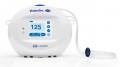
Vivano Tec®
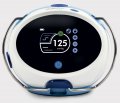
Vivano Tec Pro®
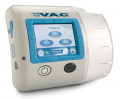
Acti VAC®
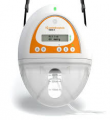
Renasys GO®
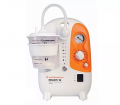
Renasys EZ MAX®
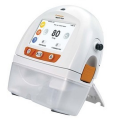
Renasys TOUCH®


